

AI Sounds So Sure of Itself. How Do I Know When It's Wrong?
AI answers with the same confidence when it is wrong. What we see in everyday work, the four things to always check, and how to stop repeating the same AI mistake.
Read articleAI answers with the same confidence when it is wrong. What we see in everyday work, the four things to always check, and how to stop repeating the same AI mistake.
Read article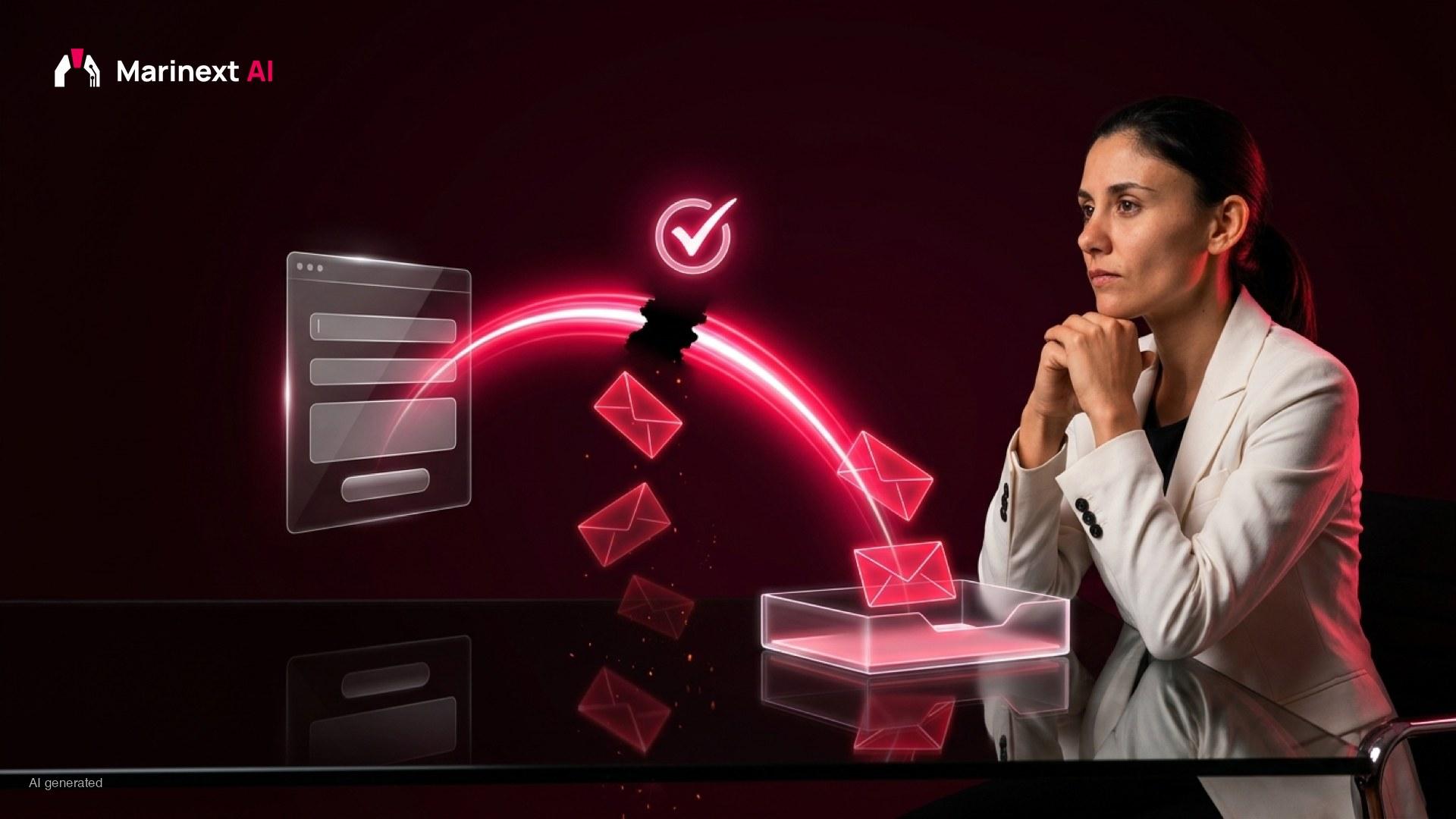
With Claude Code you can now build your own site and form. What we fixed in our own forms, and how to check yours in ten minutes.
Read article
An email AI assistant faces prompt injection from outside messages; we use 3 screening layers, yet owners must still restrict access and outbound actions.
Read article
An AI company memory scored 0.80 on test questions but 4/20 on real prompts, showing why owners must check real transcripts and task completion.
Read article
Our AI agent builds n8n workflows using node schemas and 0-error JSON validation, while keeping live credentials, deployment and testing in human hands.
Read article
Self-hosted AI observability with Langfuse keeps client-bearing traces local, yet still requires checks for network exposure, dropped turns and token costs.
Read article
Most real estate agencies believe their main problem is a lack of clients for the properties they offer. Today, I’m going to walk you through our work with an agency where the problem was exactly the opposite. This agency was generating plenty of potential clients through advertising campaigns. Forms were being filled out dozens of
Read article
I spent 30 minutes building an automation that three of the world’s most advanced AI models couldn’t get right. Let me be clear upfront: I didn’t build it in 30 minutes because I’m some kind of genius. I built it that fast because behind those 30 minutes stand 2 years of practice, hundreds of failed
Read article
You’re drowning in repetitive work. Your team is spending hours on tasks that feel important but don’t move the needle. Information gets lost between emails, spreadsheets, and conversations. Critical follow-ups slip through the cracks. And every time you try to grow, the chaos multiplies. You’ve heard “automation” can fix this. But what does that actually
Read article
At 710 columns, we hit a wall we didn’t see coming. Not because we made a mistake. Not because someone “didn’t plan properly.” But because the system was doing exactly what it was supposed to do: evolving to meet real business needs. The project had been moving perfectly. The client’s workflows were faster. The data
Read article
There’s a moment every growing company experiences, the moment when success becomes a threat to its own stability. For Marinext AI, that moment came after a conversation with a potential client… and after reviewing several of our already-running projects. As I walked through the automations we had built, the workflows we were maintaining, and the
Read article
I’ll be honest with you. As the CEO of an AI automation agency – Marinext AI, I live and breathe this technology. It’s the most powerful tool I’ve ever worked with. And right now? The excitement is everywhere. Every CEO, every team lead, every entrepreneur wants to know how AI can make their business faster
Read article
If you’re in my line of work, you’ve seen the hype. Every day, there’s a new video or a new post claiming, “AI can build your workflows now!” You see these demos where someone gives a tool like ChatGPT a single prompt, such as “Create a Make.com flow for content generation”, “Build me a Zapier
Read article
Every business that grows eventually discovers the same painful truth: Excel and Google Sheets don’t scale. They’re incredible tools for ideas, MVPs, and early operations. But once your business becomes real (especially once you have multiple teams, dozens of workflows, hundreds or thousands of data points, and information flowing across departments), spreadsheets stop being helpful
Read article
“Rosti, great lecture. This is exactly what we need in the company!“ M.’s eyes were shining with enthusiasm as he described how he wanted to transform his logistics company. He had watched the free lectures on automation and artificial intelligence by co-founder Rostislav Karashki. Two meetings.Six hours of intensive discussions.Eighteen automations, carefully divided into four
Read article
Every business starts somewhere. Very often, the first customer database lives in a simple Google Sheets file. Using Google Sheets as a CRM is like “riding a bicycle” for the first time. It is cheap, easy to handle, and perfect for a start. (I still remember: when I launched my first agency in 2018, I
Read article
Imagine you want to build a house. Before you start laying bricks, you create a plan. Detailed blueprints. Specifications. Measurements. Without this plan? The house might collapse. Or worse – you’ll build something completely different from what you envisioned. In the world of automation, this plan is referred to as a PDD, or Process Design
Read article
Today’s article comes directly from my practice – from a project that made me fundamentally rethink how I approach automation with artificial intelligence. And no, this isn’t about a technical failure. This is about a crucial insight: sometimes the best solution is NOT to use AI. Let me tell you about a
Read article
My first major automation project was the moment I realized how critically important it is to define the project scope correctly from the very beginning. The client wanted “an automation for classifying tickets.” I thought: “Easy job, I’ll finish it in a week or two.” But after two days of work, I realized that: The
Read article
Our first real-world success story: turning ticket chaos into automated efficiency. Picture this: You’re running a successful freight forwarding business. Thirty years in the market, solid reputation, growing customer base. But there’s a problem that’s eating away at your team’s productivity. Every day, hundreds of customer support tickets flood your Zendesk. Your agents spend hours just figuring out where each ticket should go. A booking confirmation gets mixed up with an urgent shipping issue. Documentation requests sit in the wrong queue for hours. Your customers wait longer than they should, and your team feels overwhelmed. Sound familiar? This was exactly the situation our client faced when they reached out to us. And it became the perfect testing ground for our newly developed HARDEN Method for Automations. But let’s dig deeper into what this really looked like before we stepped in.
Read article
The HARDEN Method is a practical, end-to-end framework for building AI automations that actually work in production—not just in demos. The HARDEN Method sequence—Discover → Design → Build → Break → Harden → Launch → Monitor—combines product ownership, engineering discipline, and QA rigor so your workflows deliver measurable outcomes: fewer manual steps, cleaner data, and predictable operations. You’ll learn how to select the right pilot, design for failure and rollback, implement guardrails (including idempotency, retries, and observability), and demonstrate ROI with KPIs that matter to your operators. If it can’t survive the Break phase, it doesn’t ship.
Read article
The HARDEN Method RACI Matrix in action – Why the biggest automation failures aren’t technical—they’re organizational. Picture this: Your AI automation is working perfectly in demos. The models are accurate, the integrations are solid, and everyone’s excited about the potential savings. Six months later, it’s collecting digital dust while your team has quietly returned to manual processes. What went wrong? Nine times out of ten, it wasn’t the technology. It was the people—specifically, unclear ownership of who decides what, when things go wrong, and who’s accountable for the outcome. When AI automations move from demos to day-to-day operations, the single biggest failure mode isn’t “bad models”—it’s unclear ownership.
Read article